
What is the erectile dysfunction?
Erectile dysfunction (impotence) is the inability to develop or keep an erection sufficient for sexual intercourse. One in ten men (10%) suffer from impotence and it is seen in almost one third (30%) of diabetic men.
The ability to develop an erection is an important part of a man’s overall health, regardless of age. However, many men suffer erectile dysfunction in silence, without seeking help or advice.
How do normal erections occur?
If he is to achieve an erection, a man needs:
- an adequate circulating level of hormones;
- an adequate blood flow to the penis;
- intact nerves supplying the penis; and
- an appropriate sexual desire.
If there is a problem with one or more of these mechanisms, erection may fail. During arousal, nerve impulses travel from the brain to the penis and trigger smooth muscle relaxation in the penis. This encourages blood to flow into the erectile tissues.
As the penis fills with blood, it enlarges and becomes erect. During enlargement, the veins in the penis become compressed, blocking the flow of blood out of the penis so that erection occurs. The penis remains erect until orgasm and/or ejaculation is completed or sexual arousal ceases.
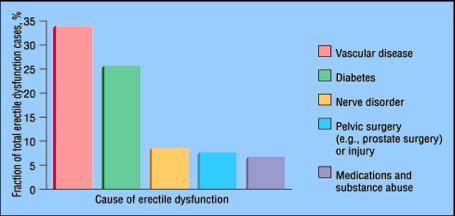
What physical causes are there for erectile dysfunction?
- Hormone imbalance – a deficiency of male hormones (such as testosterone) can reduce your desire or interest in sexual function
- Nerve damage – this can result in reduced sensitivity, or reduced signals to your penis to release the chemicals that cause an erection to develop
- Disease of the blood vessels – blood vessels can become narrowed and hardened with increasing age. This reduces blood supply to your penis. If the blood supply is poor, your penis may not fill with blood, the veins may not be compressed adequately, allowing blood to leak out of the penis. You will not, therefore, be able to maintain an erection.
- Trauma – such as injury to your spinal cord
- Pelvic surgery – some cancer operations on the prostate, bladder or bowel may result in nerve damage leading to erectile dysfunction
- Drugs – some drugs (especially those used to treat high blood pressure, depression and anxiety and recreational drugs) may cause erectile dysfunction
- Smoking and alcohol – those who smoke and drink are more likely to suffer from erectile dysfunction.
In men with diabetes, the commonest causes of erectile dysfunction are disease of the blood vessels and nerve damage (often in combination).
Can psychological problems cause erectile dysfunction?
Yes. It is not uncommon to see a combination of psychological and physical causes, but pure psychological causes are seen in less than 1 in 10 (10%) of all affected patients. Erectile dysfunction can be caused by stress, depression, anxiety, relationship problems, embarrassment, guilt and other psychological issues.
When a man has difficulty getting an erection, whatever the cause, he will often experience pressure to perform. This can lead to a feeling of inadequacy and a sense of loss of manhood (called performance anxiety). These are all common emotions for men with erectile dysfunction.
What can I do about the problem?
It is important to share your concerns with your doctor or nurse, so they can advise you about any tests which are needed. If possible, you should include your partner in the discussions to allow you to work through your concerns together.
There are some simple tests that your GP can do, such as blood tests to measure your lipids (cholesterol), blood sugar (diabetes check), early-morning fasting testosterone levels (hormone check) and measuring your blood pressure. Blood tests should be carried out first thing in the morning, (before 10am), and you should be starved from the night before.
Lowering cholesterol, high blood pressure, blood sugar levels (in diabetes) and maintaining a healthy weight are an effective starting point in treating your erectile dysfunction.
Once this assessment has been completed, other treatment options can be discussed with your GP.
What treatments are available?
It is up to you and your sexual partner to decide what treatment you choose. Your specialist will give you guidance on what he/she feels is most appropriate for you.
Specific treatment is only available on the NHS (Schedule 2) to patients who:
- have diabetes mellitus, multiple sclerosis, Parkinson’s disease, poliomyelitis;
- have renal failure treated by dialysis or transplantation;
- have had radical pelvic surgery (e.g. radical prostatectomy) or have been treated for prostate cancer (using surgery and other treatments);
- have had severe pelvic injury, single-gene neurological disease, spinal cord injury or spina bifida; or
- are not included in the above categories but were receiving NHS treatment (such as Caverject™, Viagra™ or Viridal™) for their erectile dysfunction on or before 14 September 1998.
Previously the Department of Health guidance stated that prescribing for those with erectile dysfunction causing “severe distress” should only be done by specialist services.
It is now possible for patients with erectile dysfunction to be prescribed generic sildenafil (also known as Viagra) from their own GP. This will allow you to start treatment before attending a specialist service, if this is required.
In summary, the basic treatment options are shown below. Click the titles for further information: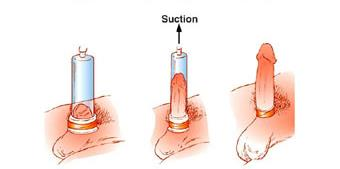
Psychosexual counselling
Some men need counselling and will be referred to a specialist in this area. Counselling can be part, or all, of the treatment required.
Vacuum erection assistance devices
Vacuum erection assistance devices are a non-invasive method of obtaining and sustaining an erection in men with impotence (erectile dysfunction).
To use the device, you insert your penis into a cylinder (right) with plenty of lubrication to provide a seal at its base. You get an erection by creating a negative pressure inside the cylinder, using a hand-operated or battery-powered pump. A ring is often placed around the base of your penis to help maintain the erection.
Tablet treatment
First-line treatment for most patients is now tablet treatment using sildenafil (generic or Viagra™), tadalafil (Cialis™), vardenafil (Levitra™) or avanafil (Spedra™).
Your GP will prescribe the tablets for you in the first instance. An NHS prescription only allows you to be prescribed one tablet per week, but generic sildenafil is not subject to these restrictions.
Hormone treatment
This is only offered to patients who are deficient in male hormones. Medication can restore hormone imbalance and but does not always restore potency.
Hormone treatment will not improve erections in men who do not have hormone deficiency (and may even be harmful in this situation).
Self-injection therapy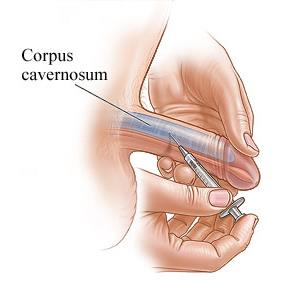
This treatment involves injecting a drug into the side of your penis each time you want an erection.
The injection causes the muscles in your penis to relax which encourages blood to flow into your penis. If you choose this option, we will train you to inject yourself.
Injection therapy is very effective but some men find the idea difficult to accept, particularly as a long-term treatment option. Injections can be used up to twice a week but you should never inject yourself more than once in any 24-hour period.
As with all drugs, there are some side-effects. For example, your erection may not go down and you then need to come to hospital to have it reversed. Fortunately, this only happens in 1 in 100 patients (1%).
Intra-urethral pellets or cream
This involves insertion of a pellet of prostaglandin into the urethra (waterpipe).
Only 35 to 40% of patients get good quality erections, and the pellet can cause pain or facial flushing.
Penile implants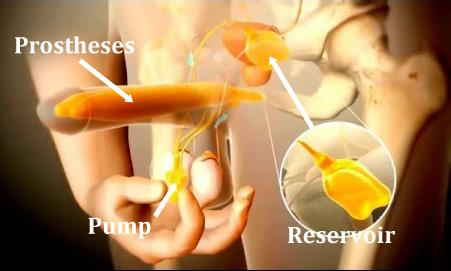
This is an invasive surgical procedure which involves putting prostheses (implants) into your penis to allow you to achieve erections for sexual intercourse. These implants are available either as inflatable or malleable (bendy) prostheses.
Penile implants are reserved for patients who have either tried and failed, or are unable to tolerate other medical treatments such as tablets, injections, vacuum devices or pellets. They may also be used in patients with other conditions in which erections have been affected, such as following priapism (prolonged painful erections) or in men with Peyronie’s disease (curvature of the penis).
The entire device is implanted into the body. It can be felt through the skin but is not visible on the outside.