
What is a catheter?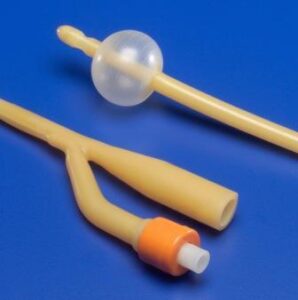
A catheter is a soft, flexible tube that is passed through your urethra (waterpipe) into your bladder to drain urine. Sometimes, a catheter is passed through the lower abdomen (tummy) instead of the urethra. This is called a suprapubic catheter.
Your catheter is connected to a bag that straps to your leg or around your abdomen. The bag fills with urine, keeps your bladder empty and can be emptied when full. The catheter may sometimes be connected to a catheter valve which means there is no bag, and your bladder will gradually fill with urine. When your bladder is full, you can release the valve to drain the urine out. This has the advantage that you do not need to wear a drainage bag.
Different types of catheter are made from different materials, including latex. If you have any history of latex allergy, please let your doctor or nurse know. They will then use a latex-free catheter.
Your catheter may feel strange at first, and you may feel very conscious of it. At first, you may have a constant desire to pass urine, even though your bladder is being emptied continuously by the catheter. This is not unusual and usually settles very quickly. It happens because your bladder tries to push the catheter out by contracting and going into spasm. Your bladder soon learns to tolerate the catheter, and this constant urge to pass urine disappears.
How should I look after the catheter?
Your catheter should be treated as a part of your own body and needs to be kept clean in the same way. You can wash it each day with warm, soapy water, when you take a bath or shower.
With a catheter in place, you need to drink plenty of fluid to help prevent urine infections. If your urine becomes dark, this may mean you are not drinking enough and you should increase your fluid intake.
You should take care not to kink or compress the catheter tubing. Do not raise the drainage bag above the level of your bladder as this will stop it draining.
Once your catheter is in place, the nurses looking after you will show you how to empty it and look after it. They will also give you spare catheters and bags. They will keep in touch with your GP and your district nursing team. Once your GP has been alerted, you can get any additional items you need from your local chemist with a GP prescription. Your team will also give you details of who to contact if you have any problems with the catheter.
The different parts of the catheter are:
The catheter itself
You do not need to do anything to the catheter, apart from keeping it clean by washing yourself and the catheter daily. You should dry yourself gently and thoroughly to prevent any soreness. If you do notice soreness where the catheter goes in, let your nurse know so you can get advice about how to relieve this.
The leg-bag for daytime use
This is attached directly to the end of the catheter and collects all the urine you produce during the day. It will become heavier as it fills. Do not let it get too full or it will pull on the catheter and cause pain, bladder spasm or even catheter displacement.
Always wash your hands before and after emptying your drainage bag into the toilet or a urine bottle. Leg-bags may last up to seven days, after which they should be replaced.
The leg-bag support
This is rather like a footless sock and is used to keep your leg-bag securely attached to your leg.
The G-strap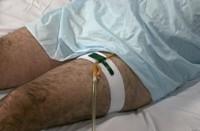
This stops your catheter from being pulled out. It has a Velcro strap which goes around the catheter and your leg, holding the catheter firmly in position.
The night drainage bag
A larger night bag connects directly to your leg-bag at night without disconnecting it from the catheter. It holds more urine than your leg-bag, so you should not need to empty it during the night.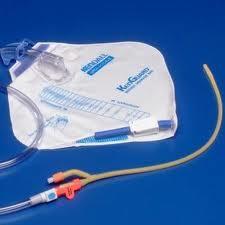
To connect the night drainage bag:
- remove the leg-bag support;
- wash your hands carefully;
- empty the leg-bag and, with the tap still open, push the end of the night bag into the tubing below the tap to form a direct route for urine into the night bag;
- attach the night bag to its stand on the floor by the side of your bed; and
- in the morning, turn off the tap at the bottom of your leg-bag, disconnect the night bag and empty it into the toilet. The night bag can then be discarded or rinsed with warm water to be used the next night. Your nurse will advise you about this.
We normally give you a small supply of leg and night bags when you go home. If you need to dispose of a bag, rinse it out with water, put it in a plastic bag and leave it with your normal household waste. Your GP will continue to prescribe your new bags and other equipment.
What sort of problems can occur at home?
Some problems may occur with your catheter but your district nurse, GP or nurse practitioner can advise you on what to do:
Bladder spasms
Bladder spasms feel like abdominal (tummy) cramps. They are usually caused by the bladder trying to squeeze out the balloon that holds your catheter in place. If spasms are causing you distress, your GP can prescribe a drug which helps relax your bladder.
Leakage around the catheter
This is called “by-passing”. It is sometimes caused by bladder spasms (see above) or can happen when you open your bowels. It can also happen if your catheter is blocked and stops draining (see below).
Blood or debris in the urine
Debris causing cloudy urine is inevitable and is commoner the longer a catheter has been in your bladder. It can sometimes block the catheter. If this happens, you should contact your catheter nurse or GP.
If you see blood coming through your catheter, contact your catheter nurse, district nurse or GP. It is usually due to infection but, if not, you may need further tests to work out why it is happening.
Blockage
This can cause a lot of pain and needs urgent attention. Check that your drainage bag is below the level of your bladder (the lower part of your tummy), that the catheter and tubing are not kinked or twisted, and that there are no clots or debris in the catheter. If the catheter will not unblock, and no urine is draining, contact your district nurse or GP immediately.
Catheter falling out
If your catheter falls out, contact your district nurse or catheter nurse immediately so it can be replaced. If this keeps happening, your GP may refer you to a urologist for further advice.
Urine infection
You will always have bacteria in your urine if you have had a catheter for more than a few days. This does not mean you have a urine infection, and you do not need to take antibiotics. Antibiotics are only needed if you develop symptoms of a urine infection.
If you have symptoms (a high temperature, a lot of bladder discomfort, a painful urethra), you should contact your district nurse, catheter nurse or GP. They will decide whether you need antibiotics and may send a urine sample for laboratory testing.