
What does this procedure involve?
This involves putting a telescope through your urethra (waterpipe) into your bladder to look at the lining of both. We normally remove any blood clots we see using suction but, occasionally, we need to use diathermy (electric current) to break up large clots. If we find any abnormality in your bladder, we may biopsy the area, remove it completely using diathermy or cauterise it to stop the bleeding.
What are the alternatives?
- Irrigation & bladder washouts – usually performed through a large bladder catheter on the ward, with you awake; most people having a cystoscopy and bladder washout will already have had this done
- Open washout & packing of the bladder – only performed when telescopic inspection has been tried and has failed
What happens on the day of the procedure?
Your urologist (or a member of their team) will briefly review your history and medications, and will discuss the surgery again with you to confirm your consent.
An anaesthetist will see you to discuss the options of a general anaesthetic or spinal anaesthetic. The anaesthetist will also discuss pain relief after the procedure with you.
We may provide you with a pair of TED stockings to wear, and we may give you a heparin injection to thin your blood. These help to prevent blood clots from developing and passing into your lungs. Your medical team will decide whether you need to continue these after you go home.
Details of the procedure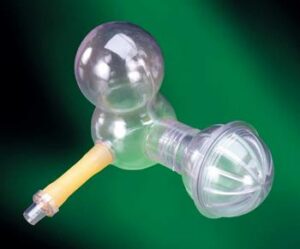
- We normally use a full general anaesthetic (where you will be asleep) or a spinal anaesthetic (when you will be numb from the waist down)
- We usually give you an injection of antibiotics before the procedure, after you have been checked for any allergies
- We put a telescope into your bladder through your urethra (water pipe) to inspect the urethra and bladder
- If there are any clots in the bladder, we remove them using a suction evacuator; large clots may need breaking up with diathermy (electric current) before they can be removed
- If we find anything in the bladder that might be causing the bleeding, we will cauterise, biopsy or remove it with diathermy
- We usually put in a catheter at the end of the procedure that allows us to irrigate your bladder continuously
- You may need further irrigation and bladder washouts afterwards
- The procedure may take between 10 minutes and one hour or more
- The average stay in hospital for this procedure is five days
Are there any after-effects?
The possible after-effects and your risk of getting them are shown below. Some are self-limiting or reversible, but others are not. We have not listed very rare after-effects (occurring in less than 1 in 250 patients) individually. The impact of these after-effects can vary a lot from patient to patient; you should ask your surgeon’s advice about the risks and their impact on you as an individual:
| After-effect | Risk |
|---|---|
| Mild burning or bleeding on passing urine for a short time after the procedure |
 Almost all patients Almost all patients |
| Temporary insertion of a bladder catheter which needs to be removed later |
Almost all patients |
| Permission for telescopic removal/biopsy of an abnormality, if found |
Almost all patients |
| Infection of the bladder requiring antibiotic treatment |
 Between 1 in 10 & 1 in 50 patients Between 1 in 10 & 1 in 50 patients |
| Finding a cause for the bleeding, such as cancer, which requires further treatment at a later stage |
Between 1 in 10 & 1 in 50 patients |
| Perforation of your bladder requiring a temporary catheter or open surgical repair |
 Between 1 in 50 & 1 in 250 patients Between 1 in 50 & 1 in 250 patients |
| Delayed bleeding requiring removal of clots or further surgery |
Between 1 in 50 & 1 in 250 patients |
| Injury to the urethra (water pipe) causing delayed scar formation |
Between 1 in 50 & 1 in 250 patients |
| Anaesthetic or cardiovascular problems possibly requiring intensive care (including chest infection, pulmonary embolus, stroke, deep vein thrombosis, heart attack and death) |
Between 1 in 50 & 1 in 250 patients (your anaesthetist can estimate your individual risk) |
What is my risk of a hospital-acquired infection?
Your risk of getting an infection in hospital is between 4 & 6%; this includes getting MRSA or a Clostridium difficile bowel infection. This figure is higher if you are in a “high-risk” group of patients such as patients who have had:
- Long-term drainage tubes (e.g. catheters)
- Long hospital stays
- Multiple hospital admissions
What can I expect when I get home?
- You will be given advice about your recovery at home
- You will be given a copy of your discharge summary and a copy will also be sent to your GP
- Any antibiotics or other tablets you may need will be arranged & dispensed from the hospital pharmacy
- You should drink twice as much fluid as you would normally for the first 24 to 48 hours, to flush your system through and reduce the risk of infection
- If you cannot pass urine after your bladder catheter is removed, you may be discharged with a catheter in; we will show you how to manage it at home and arrange for you to have it removed at an appropriate time
- If you develop a fever, severe pain on passing urine, inability to pass urine or worsening bleeding, you should contact your GP immediately
- If you need a follow-up outpatient appointment or further investigations, we will arrange them for you, and tell you when they will take place
- You may return to work when you are comfortable enough and when your GP is satisfied with your progress
General information about surgical procedures
Before your procedure
Please tell a member of the medical team if you have:
- An implanted foreign body (stent, joint replacement, pacemaker, heart valve, blood vessel graft)
- A regular prescription for a blood thinning agent (warfarin, aspirin, clopidogrel, rivaroxaban or dabigatran)
- A present or previous MRSA infection
- A high risk of variant-CJD (e.g. if you have had a corneal transplant, a neurosurgical dural transplant or human growth hormone treatment)
Questions you may wish to ask
If you wish to learn more about what will happen, you can find a list of suggested questions called “Having An Operation” on the website of the Royal College of Surgeons of England. You may also wish to ask your surgeon for his/her personal results and experience with this procedure.
Before you go home
We will tell you how the procedure went and you should:
- Make sure you understand what has been done
- Ask the surgeon if everything went as planned
- Let the staff know if you have any discomfort
- Ask what you can (and cannot) do at home
- Make sure you know what happens next
- Ask when you can return to normal activities
We will give you advice about what to look out for when you get home. Your surgeon or nurse will also give you details of who to contact, and how to contact them, in the event of problems.
Smoking and surgery
Ideally, we would prefer you to stop smoking before any procedure. Smoking can worsen some urological conditions and makes complications more likely after surgery. For advice on stopping, you can:
- Contact your GP
- Access your local NHS Smoking Help Online
- Ring the free NHS Smoking Helpline on 0800 169 0 169
Driving after surgery
It is your responsibility to make sure you are fit to drive after any surgical procedure. You only need to contact the DVLA if your ability to drive is likely to be affected for more than three months. If it is, you should check with your insurance company before driving again.